
?These things I have spoken to you, so that in Me you may have peace.
??In the world you have tribulation, but take courage: I have overcome the world.? (John 16:33)
MINISTRY UPDATE FROM REVEREND GARRY INGRAHAM
As God?s people, courage is a quality we are told to embrace and live out. Again and again, we see this command and encouragement throughout the Scriptures. As believers who live in a predominantly worldwide pagan culture, including in the United States, Christ-followers are in need of godly character that defies societal norms. Character expressed in love, truth, gentleness, patience, joy, as well as courage.
The need for courage assumes the presence of fear. I certainly don?t need to tell you that we are living in very uncertain and fearful times. People are concerned about the present, and many feel anxiety about the future.
Whether it?s COVID-19 illness, the global response to COVID-19, the lockdowns, mandates, economic disaster, tribalism, vaccinated vs. unvaccinated, striving for political advantage, etc.? Or, the war on Ukraine, threat of world-war III, rising gas prices, inflation, our national soring debt, cancel culture? These are crazy, fear-inducing times. We need courage that rests on an eternal God who calls us to take refuge in Him.
As a ministry based in the truth of God?s word, we are swimming against the tide of culture. Due to sin, self, and rebellion, secular culture has always pulled in the opposite direction from the narrow way Jesus instructs us to walk. But like the tide or a current of water, its power can range from barely discernable movement to a raging undertow and riptide. It feels to me like we?re rapidly moving toward the later. Courage is needed.
I?m reminded of Paul?s words in Ephesians 6:13-16, ?Therefore, take up the full armor of God, so that you will be able to resist in the evil day, and having done everything, to stand firm. Stand firm therefore, having girded your loins with truth, and having put on the breastplate of righteousness, and having shod your feet with the preparation of the gospel of peace; in addition to all, taking up the shield of faith with which you will be able to extinguish all the flaming arrows of the evil one.?
In my teaching and preaching, I frequently express a deep concern over the compromised Church in the United States. I believe we are in a ?wheat and tares? scenario (Matt 13:24-30). Not all that is called ?the Church? is of God. Not all who call themselves ?Christians? are followers of Christ (Matt 7:23).
We see this dichotomy throughout many denominations, but most certainly within the United Methodist Church. Those who have surrendered their lives to the Lordship of Jesus as the only way of salvation that He has provided through his cross and resurrection cannot simply coexist under the same denominational roof as those who use many of the same words, but twist their clear meaning. Those who celebrate what the Scriptures call sin, leading and teaching others to do the same, are violently opposing the very God they claim to serve (Mark 9:42).
In love and clarity, true followers of Christ have been called to come out from among those who claim an authentic faith on the one hand, while at the same time reveling in patterns of sin and calling those things righteous.
?But actually, I wrote to you not to associate with any so-called brother if he is an immoral person, or covetous, or an idolater, or a reviler, or a drunkard, or a swindler ? not even to eat with such a one. For speaking out arrogant words of vanity they entice by fleshly desires, by sensuality, those who barely escape from the ones who live in error, promising them freedom while they themselves are slaves of corruption; for by what a man is overcome by this he is enslaved.? (2 Peter 2:18-19)
It is vital that we make a distinction between someone who is deeply struggling with a pattern of sin, perhaps even addicted, but yet actually trying and desiring to walk with God (this was true of me for a couple of years), and the person who has welcomed and embraced their sin, twisting it to appear as a good thing (Isaiah 5:20). Recasting what the Bible calls sin as an immutable identity seems to be a pretty popular thing to do these days.
Christians need to do a far better job of supporting and strengthening those who are struggling and failing, yet want to break free. Often, it?s the love and faithfulness of the Body of Christ that gives the struggling one the hope, companionship, and accountability they need to become free and follow hard after God.
As Christ-followers, we need both love and courage to care enough to speak the truth to those who have gone off the rails by proclaiming a relationship with Christ but intentionally live in open rebellion to the clear teaching of the Scriptures.
Even though we live in this world as strangers and aliens to sin and the world system, that does not mean Christians should have nothing to do with the function and structure of federal, State, and local governance. On the contrary, Christians should be involved across each of the seven primary mountains of culture: Religion/faith, family, education, government/law, media/news, arts/entertainment, and business/economics.
?Beloved, I urge you as aliens and stranger to abstain from fleshly lusts which wage war against the soul.? (1 Peter 2:11)
?The LORD God has told us what is right and what he demands: ?See that justice is done, let mercy be your first concern, and humbly obey your God.?" (Micah 6:8)
We need courage to stand up against the devourer in our time. We are witnessing an all-out demonic attack against women who bare God?s equal and precious image within their feminine uniqueness, as well as deliberate attacks against children. It?s tragic to say, but the womb is a most dangerous place for boys and girls alike right now. It is estimated that 63,000,000 babies have been killed since abortion was legalized in the U.S. One in four pregnancies now end in abortion.
This isn?t only a tragedy for the children who never had a chance at life, this is also tragedy for the mothers who know in their soul they either initiated or gave into coercion to end the life of their baby. This is heavy on the souls of women ? perhaps heaviest to those celebrating their abortion(s) the loudest.
If babies are fortunate enough to be allowed to make it to full term and born alive, that should be enough to know they will be given a real chance at life. Actually, that assumption is no longer true. A headline in the Washington Times from February 2020 reads, ?House Democrats block for 80th time born-alive bill requiring care for botched-abortion survivors.? It should be noted that three democrats voted against their party in support of care for babies born alive.
Taking the killing of babies one step further, Maryland senate bill 669 ? the ?Pregnant Person?s Freedom Act of 2022? ? attempts to legalize even more heinous actions against children and humanity. In addition, notice the erasure of women in the title of the bill. By God?s design, nobody other than a woman can become pregnant and carry a baby.
However, the proponents of bill 669 are not satisfied with killing a baby all the way up to full-term in pregnancy. If passed, this legislation would prevent investigation and punishment for many infant deaths up to 28 days after birth. The Washington Standard reports, ?This is because the legislation prohibits investigations and criminal prosecutions for women and medical professionals for a ?failure to act? in relation to a ?perinatal death.?
We have become a well-dressed, well-educated, sophisticated, and yet barbaric society. No wonder Jesus describes the world before His return as, ?Many false prophets will arise and will mislead many. Because lawlessness is increased, most people?s love will grow cold? (Matthew 24:11-12).
Transgenderism has become one of the most celebrated and promoted aspects of modern secular culture, especially in the U.S. Culture?s embrace of it rather than genuinely seeking to compassionately help men and women in emotional conflict against their biology is tragic.
It feels to me like our society has lost its collective mind as I see the obvious widespread misogyny and devaluing of women. So many look on and applaud (even prominent women) as a man who believes he?s a woman and now goes by the name of Rachel Levine makes it on USA Today?s list of ?women of the year?.
Another man who now goes by the name Lia Thomas ? a mediocre performer in men?s swimming competitions ? has jumped the rails (as other men are doing) into women?s sports, crushing women?s records and titles as a ?transgender woman?. The reporters and newscasters all gush over the astounding accomplishments of this fresh, new athlete.
As a kid, the short story of The Emperor?s New Clothes was so funny to me. I loved the story and laughed at the absurdity of it. Now, you and I live in a country that has been taken captive by the absurd, just like the comical fable. Most of those in leadership across the seven mountains of culture look at the ?naked emperors? all around us and declare more loudly than the last person, ?What incredible clothes you have?! They perpetuate deception and lies masquerading as truth because they are desperate not to stand out or look foolish. Tragically, even increasing numbers within the mountain of Religion & Faith are buckling under peer pressure and cancel culture by making accommodation for what is clearly false.
Christians don?t have to be jerks to speak the truth. The Church has done plenty of that historically. The alternative is not to slink off from the public square back into the four walls of our church buildings, until those in control gain enough power that they come for pastors, leaders, and Christians in their places of worship. Make no mistake, our enemies intend to dictate all of what?s allowed to be stated from our pulpits. That is the trajectory of our future if believers do not rise up in love and courage, entering back into all the seven mountains of culture and restore reality.
Instead of including a testimony in this ministry update, I hope you?ll both enjoy and be a little shocked at the similarities between where we are as a culture and the absurdity of ?The Emperor Has No Clothes? story.
The Emperor's New Clothes
by Hans Christian Andersen
Many years ago, there was an Emperor who was so very fond of new clothes that he spent all his money on them. He did not trouble about his soldiers. He did not care to go to the theatre. He only went out when he had the chance to show off his new clothes. He had a different suit for each hour of the day. Most kings could be found sitting in council. It was said of the Emperor, ?He is sitting in his wardrobe.?
One day, two fellows calling themselves weavers came to town. They said that they knew how to weave cloth of the most beautiful colors and patterns. The clothes made from this wonderful cloth would be invisible to everyone who was unfit for the job he held, or who was very simple in character.
?These must, indeed, be splendid clothes!? thought the Emperor. ?If I had such a suit, I might at once find out what men in my kingdom are unfit for their job. I would be able to tell the wise men from the foolish! This stuff must be woven for me immediately.? He gave large sums of money to both the weavers in order that they might begin their work at once.
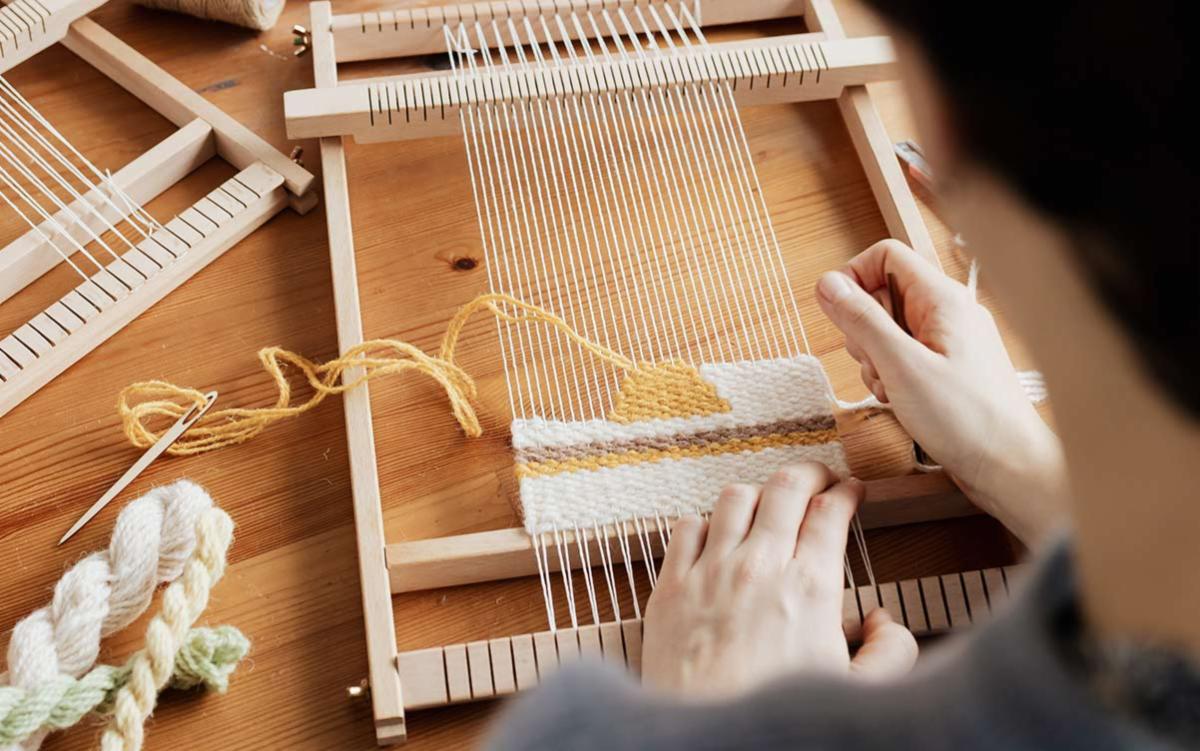
So the two pretend weavers set up two looms. They worked very busily, though in reality they did nothing at all. They asked for the finest silk and the purest gold thread. They put both into their own knapsacks. Then they pretended to work at the empty looms until late at night.
?I should like to know how the weavers are getting on with my cloth,? said the Emperor to himself one day. When he remembered that a simpleton, or one unfit for his job would be unable to see the cloth he began to worry. To be sure, he thought he was safe. However, he would prefer sending somebody else to bring him news about the weavers, and their work. All the people in the kingdom had heard of the wonderful cloth. All were eager to learn how wise or how foolish their neighbors might be.
?I will send my faithful old wise man to the weavers,? said the Emperor at last. ?He will be best able to see how the cloth looks. He is a man of sense. No one can be better for his job than he is.?
So the faithful old wise man went into the hall where the thieves were working with all their might at their empty looms. ?What can be the meaning of this?? thought the old man, opening his eyes very wide. ?I cannot find the least bit of thread on the looms.? However, he did not say his thoughts aloud.
The thieves asked him very kindly to be so good as to come nearer their looms. Then, they asked him whether the cloth pleased him. They asked whether the colors were not very beautiful. All the time they were pointing to the empty frames. The poor old wise man looked and looked. He could not see anything on the looms for a very good reason. There was nothing there.
?What!? thought he again. ?Is it possible that I am a fool? I have never thought so myself. No one must know it now if I am so. Can it be, that I am unfit for my job? No, the Emperor must not know that either. I will never tell that I could not see the stuff.?
?Well, Sir!? said one of the weavers still pretending to work. ?You do not say whether the cloth pleases you.?
?Oh, it is excellent!? replied the old wise man, looking at the loom through his spectacles. ?This pattern, and the colors, yes, I will tell the Emperor without delay, how very beautiful I think them.?
?We shall be much obliged to you,? said the thieves. Then they named the many colors and described the pattern of the pretended stuff. The old wise man listened with care to their words so he might repeat them to the Emperor. The thieves asked for more silk and gold saying that it was necessary to complete what they had begun. Once again they put all that was given them into their knapsacks. They went on working with as much effort as before at their empty looms.
The Emperor soon sent another man from his court to see how the weavers were getting on. Now he wanted to know if the cloth would soon be ready. It was just the same with this gentleman as with the wise man. First he looked closely at the looms on all sides. He could see nothing at all but the empty frames.
?Does not the stuff appear as beautiful to you, as it did to my lord the wise man?? asked the thieves of the Emperor?s second advisor.
?I certainly am not stupid!? thought the man. ?It must be, that I am not fit for my good job! That is very odd. However, no one shall know anything about it.?
And so he praised the stuff he could not see. He declared that he was happy with both colors and patterns. ?Indeed, your Imperial Majesty,? he said to his emperor when he returned. ?The cloth which the weavers are preparing is extraordinarily magnificent.?
The whole city was talking of the splendid cloth, which the Emperor had ordered to be woven.
Finally, the Emperor himself wished to see the costly material while it was still in the loom. He took many officers of the court and the two honest men who had already admired the cloth. As soon as the weavers saw the Emperor approach, they went on working faster than ever although they still did not pass even one thread through the looms.
?Is not the work absolutely magnificent?? said the two officers of the crown, already mentioned. ?If your Majesty will only be pleased to look at it! What a splendid design! What glorious colors!? and at the same time they pointed to the empty frames; for they imagined that everyone else could see this exquisite piece of workmanship.
?How is this?? said the Emperor to himself. ?I can see nothing! This is indeed a terrible affair! Am I a simpleton, or am I unfit to be an Emperor? That would be the worst thing that could happen?Oh! The cloth is charming,? said he, aloud. ?I approve of it completely.? He smiled most graciously and looked closely at the empty looms. No way would he say that he could not see what two of his advisors had praised so much. Everyone with the Emperor now strained his or her eyes hoping to discover something on the looms, but they could see no more than the others.
Nevertheless, they all exclaimed, ?Oh, how beautiful!? and advised his majesty to have some new clothes made from this splendid material for the parade that was planned. ?Magnificent! Charming! Excellent!? was called out on all sides. Everyone was very cheerful. The Emperor was pleased. He presented the weavers with the emblem of an order of knighthood. The thieves sat up the whole of the night before the day on which the parade was to take place. They had sixteen lights burning, so that everyone might see how anxious they were to finish the Emperor?s new suit. They pretended to roll the cloth off the looms. They cut the air with their scissors and sewed with needles without any thread in them. ?See!? cried they, at last.
?The Emperor?s new clothes are ready!?
The Emperor, with all the grandees of his court, came to the weavers. The thieves raised their arms, as if in the act of holding something up. ?Here are your Majesty?s trousers! Here is the scarf! Here is the mantle! The whole suit is as light as a cobweb; one might fancy one has nothing at all on, when dressed in it.?
?Yes indeed!? said all the courtiers, although not one of them could see anything of this special cloth.
The Emperor was undressed for a fitting, and the thieves pretended to array him in his new suit. The Emperor turned round and from side to side before the looking glass.
?How splendid his Majesty looks in his new clothes, and how well they fit!? everyone cried out. ?What a design! What colors! These are indeed royal robes!?
?I am quite ready,? said the Emperor. He appeared to be examining his handsome suit.
The lords of the bedchamber, who were to carry his Majesty?s train felt about on the ground as if they were lifting up the ends of the mantle. Then they pretended to be carrying something for they would by no means want to appear foolish or not fit for their jobs.
The Emperor walked under his high canopy in the midst of the procession, through the streets of his capital. All the people standing by, and those at the windows, cried out, ?Oh! How beautiful are our Emperor?s new clothes! What a magnificent train there is to the mantle; and how gracefully the scarf hangs!? No one would admit these much admired clothes could not be seen because, in doing so, he would have been saying he was either a simpleton or unfit for his job.
?But the Emperor has nothing at all on!? said a little child. ?Listen to the voice of the child!? exclaimed his father. What the child had said was whispered from one to another. ?But he has nothing at all on!? at last cried out all the people. The Emperor was upset, for he knew that the people were right. However, he thought the procession must go on now! The lords of the bedchamber took greater pains than ever, to appear holding up a train, although, in reality, there was no train to hold, and the Emperor walked on in his underwear.